
Solar panel installation in Hampshire for today's and tomorrow's electricity use.
A surveyor looks at the roof before anything is specified, and the system is sized for the electricity your household uses now and what is likely to change next.
Free and no obligation. Payment options available on qualifying routes.
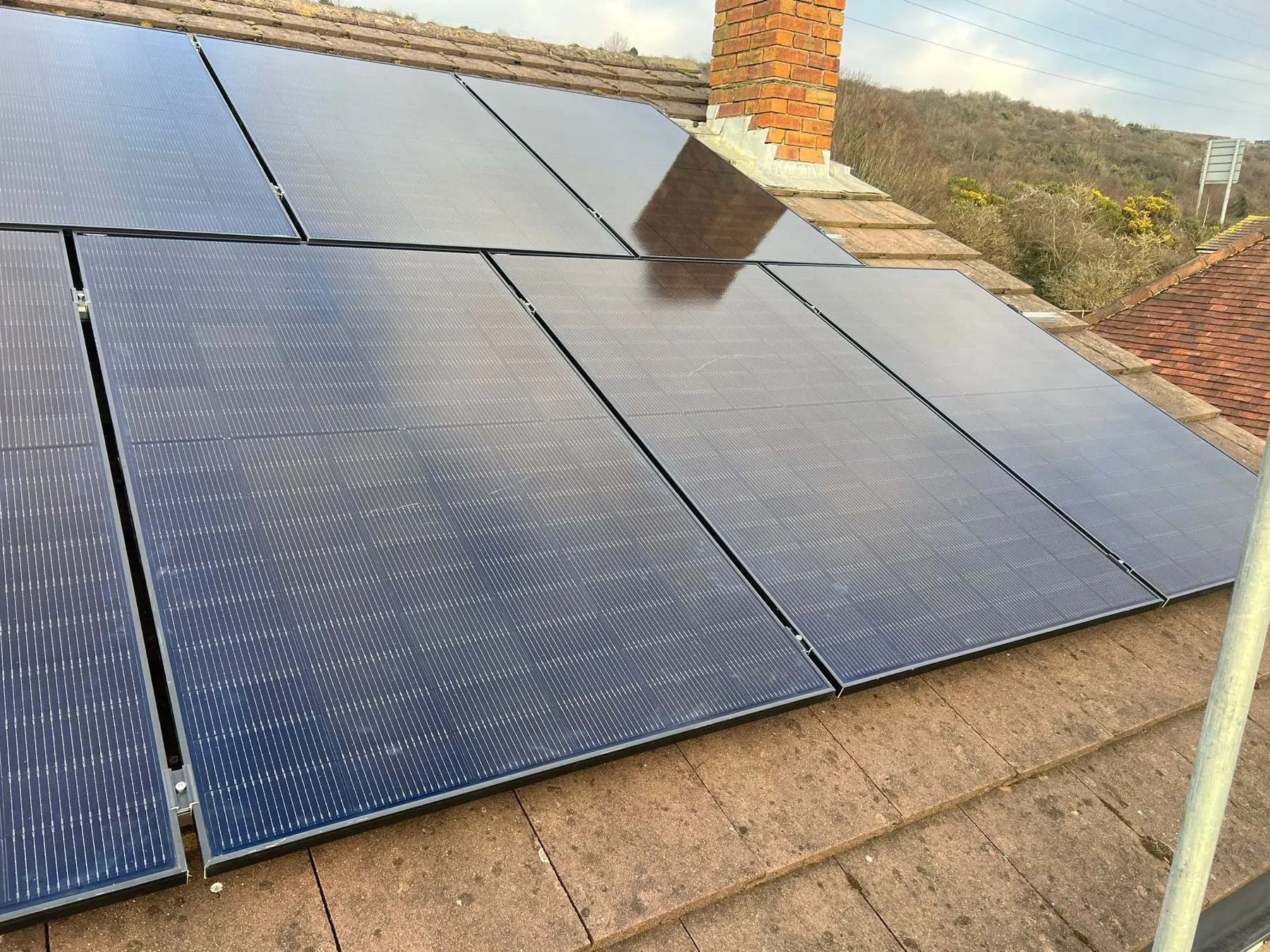 Fareham, Hampshire
How solar cuts what you pay for electricity.
Panels turn daylight into electricity the moment it lands on the roof, and the home uses that power first. Every unit the roof supplies is a unit you do not buy from your supplier.
Winter and dull days produce less, so judge a system over a year: what it generates, and how much of that the household uses itself. Storage lifts the self-used share, and surplus may earn export payments.
The estimate comes from your roof and usage, not a county average. See what decides suitability in Hampshire.
Design the array for the household you will have.
Today's usage
Panel count starts from what your household actually uses and when, not from a standard package.
A car to come
An EV adds a regular load. If one is likely, the array and inverter are sized with it in mind.
A heat pump
Electric heating lifts winter demand, which changes how much a battery and a larger array are worth.
A battery later
A hybrid inverter keeps the option open, so storage can be added without replacing the inverter.
Choosing the inverter.
Three types are common. A string inverter handles the whole array and costs least, which suits a plain, unshaded roof. Microinverters sit behind individual panels, so a chimney's shadow only affects the panels it touches. A hybrid inverter manages a battery as well as the panels, which makes it the usual pick when storage is planned.
Compatibility matters most as a system grows. Inverter, battery and charger have to work as a set, so they are chosen together at the design stage.
Roof or ground-mounted?
Most homes we quote take panels on the roof, normally the least costly route where there is clear, unshaded space. A larger plot, as around the New Forest and the Test Valley, may suit a ground-mounted array better than a shaded or awkward roof.
Thatch rules panels out, since it cannot take the fixings or the weight. For a thatched home we look at a ground array or an outbuilding instead, and the survey settles what is workable.
Hampshire systems we have fitted.
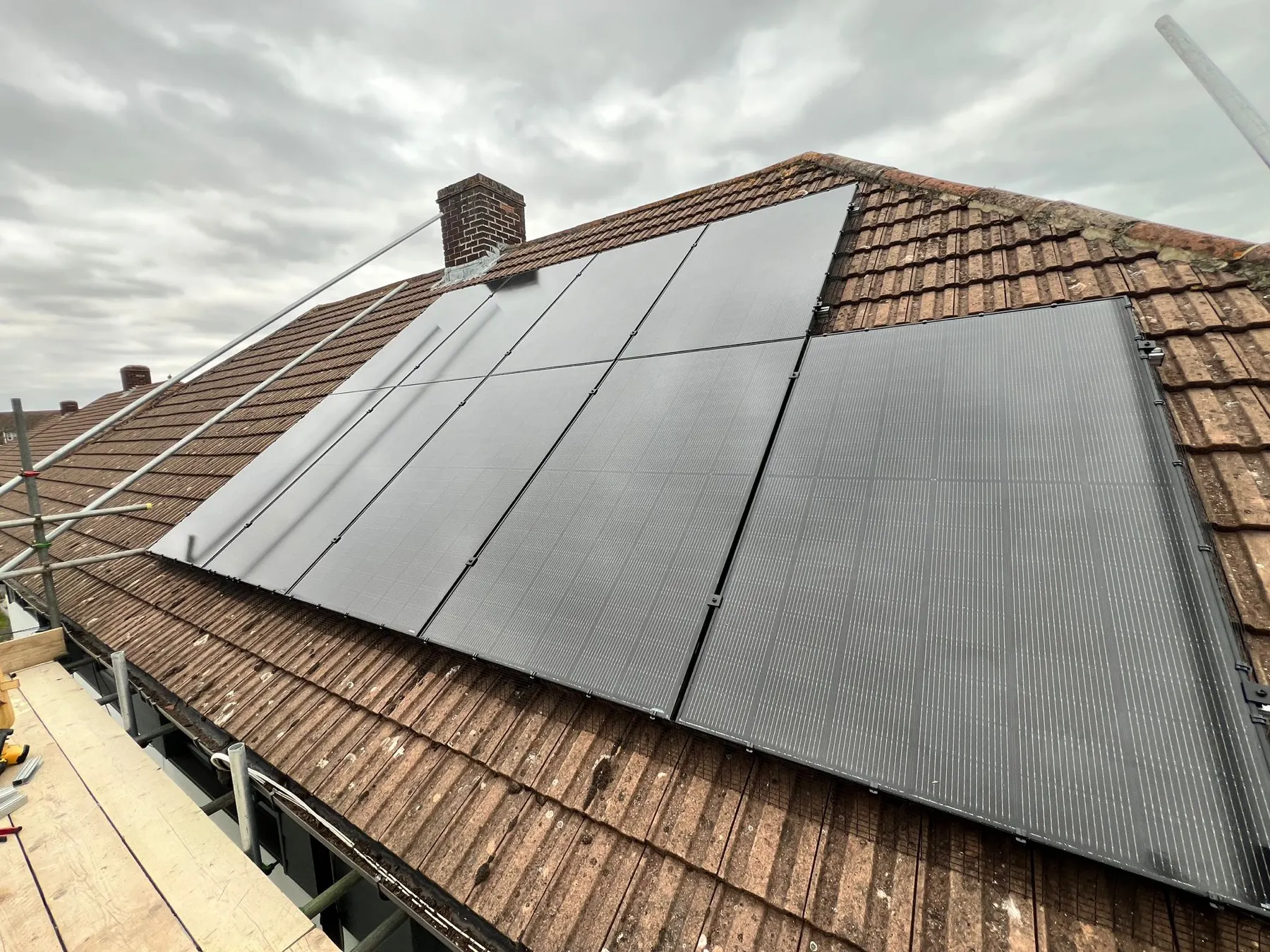
D. Dolman
Gosport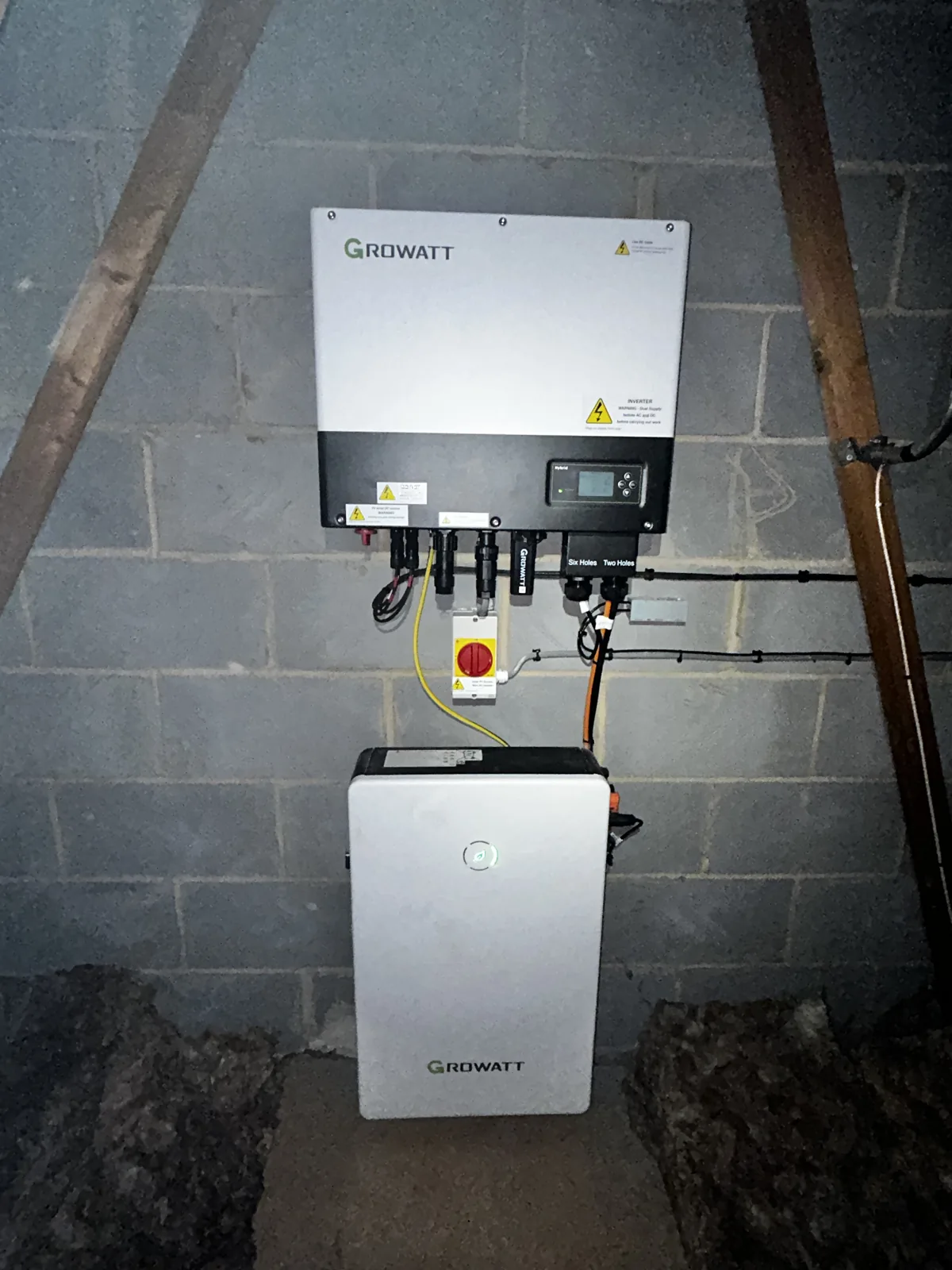
Allfrey
Waterlooville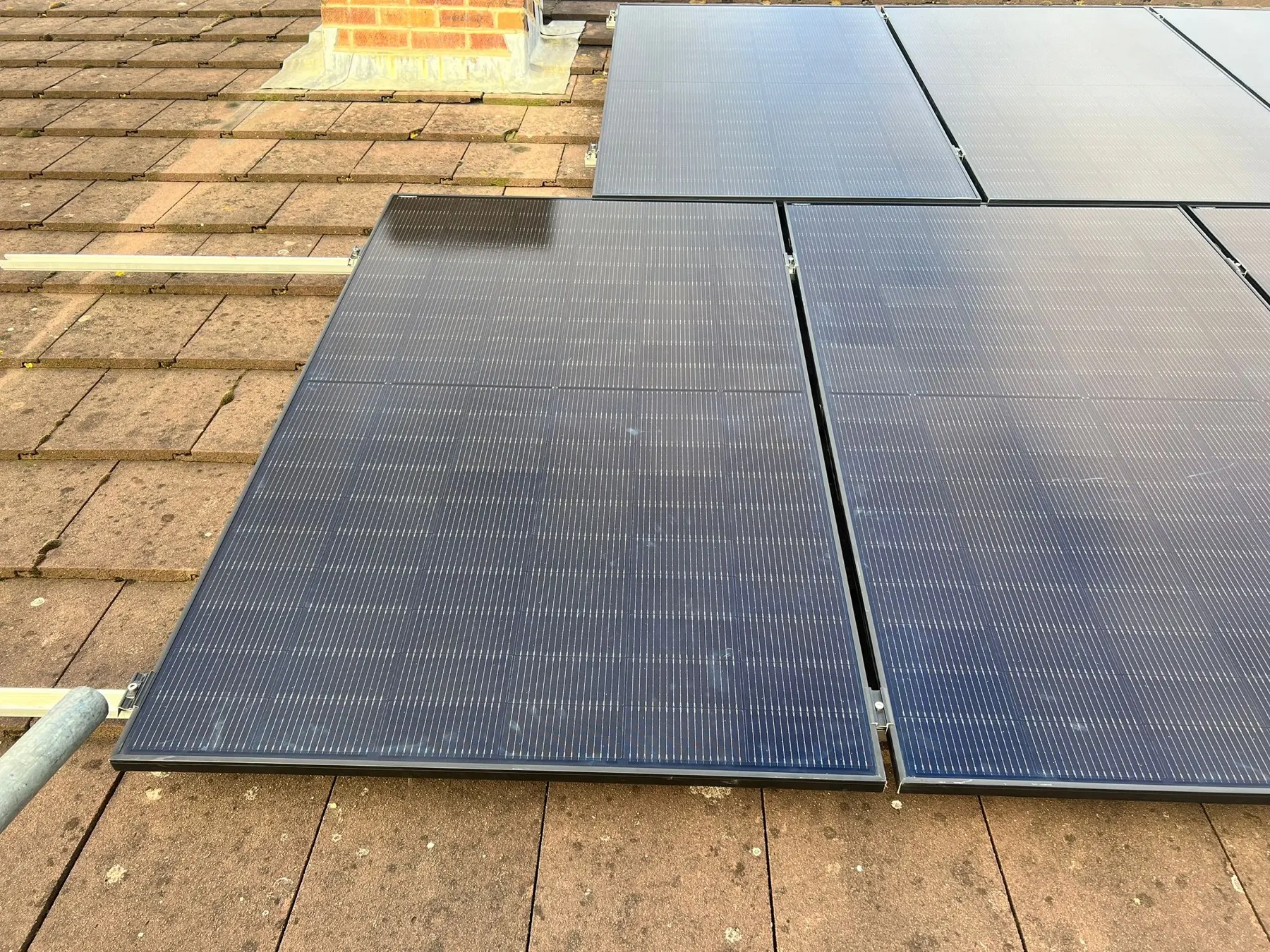
Butcher
FarehamFigures are the estimated first-year benefit calculated for each customer's own system at the time of installation, based on MCS-standard assessment methodology. They are estimates, not guarantees, so actual savings vary with household usage, weather and electricity prices.
Build the system around the home, then structure the payment.
Once the design is settled, compare paying outright with the finance routes currently available: monthly payments, selected short-term 0% offers and qualifying no-upfront-cost routes. Your proposal keeps price, projected benefit and payment route separate.
Solar and battery installations are also currently zero-rated for VAT, a relief that runs until 31 March 2027. A longer repayment term can lower the monthly cost but raises the total cost of credit.
Multiple homes, one area?
Ask about current neighbourhood or area-installation offers. If nearby homes are installing around the same time, we can check whether anything applies when you add your postcode.
Finance is subject to status, affordability and lender approval. The installation team behind Hampshire Solar acts as a credit broker, not a lender. Asking about payment options is not a finance application and won't affect your credit file.
What a Hampshire proposal should tell you.
A proposal rests on assumptions, and you can ask to see every one. Look for these:
System
Panel count, inverter, kWp and where each piece is positioned.
Output
Annual generation expected, with the shading allowance applied.
Benefit
The share the household uses itself, plus the export assumptions.
Storage or charger
Capacity and wiring for any battery or charger, now or later.
Cover
Warranties, and how performance figures are validated.
Cost
Project price, with finance terms if you ask for them.
Where EPVS validation applies, the performance assumptions are independently checked. The team behind Hampshire Solar is MCS certified and TrustMark registered.
What homeowners ask about solar.
How long does installation take?
One to two days for most homes, depending on system size and roof access. Scaffolding usually goes up the day before, and your installer walks you through the system before leaving.
Will I need planning permission?
Most Hampshire homes fall under permitted development, so no application is needed. Listed buildings and some homes in conservation areas or the national parks are the main exceptions. See our Why Hampshire page for the detail.
Should I design solar around a future EV?
If a car is likely within a few years, yes. A charger adds a regular load, so the array and inverter are better sized for it from the start than patched afterwards.
How much roof space do I need?
It depends on your electricity use and how many panels you want, which the survey establishes. We model the usable area, orientation and shading before recommending a system size.
What upkeep and warranties should I expect?
Panels have no moving parts. An occasional check for moss, debris or shading from new growth is usually enough. Manufacturers typically back panels with a 25-year-plus performance warranty on top of a shorter product warranty, and we add workmanship cover. Exact terms are in your proposal.
Build the wider home-energy plan.
Battery Storage
Keep daytime surplus for after dark. Compare home battery storage →
EV Charging
Let the car run on your own panels. Check EV charger options →
Why Hampshire
What decides whether a roof suits solar. Check suitability →
Build your home energy plan
Tell us about your home, how you use electricity and what may change next. We'll use it to design a plan around that demand.
Free and no obligation. Asking about payment options is not a finance application and won't affect your credit file.
You are not committing to anything by asking. If the home looks like a fit, someone from the team may be in touch to clear up a few details before your plan is drawn up.