
How roof, household demand and future electrification affect solar in Hampshire.
Most Hampshire homes can take solar, but the answer comes down to the roof, how your household uses power and what may be added next.
Free and no obligation. Payment options available on qualifying routes.
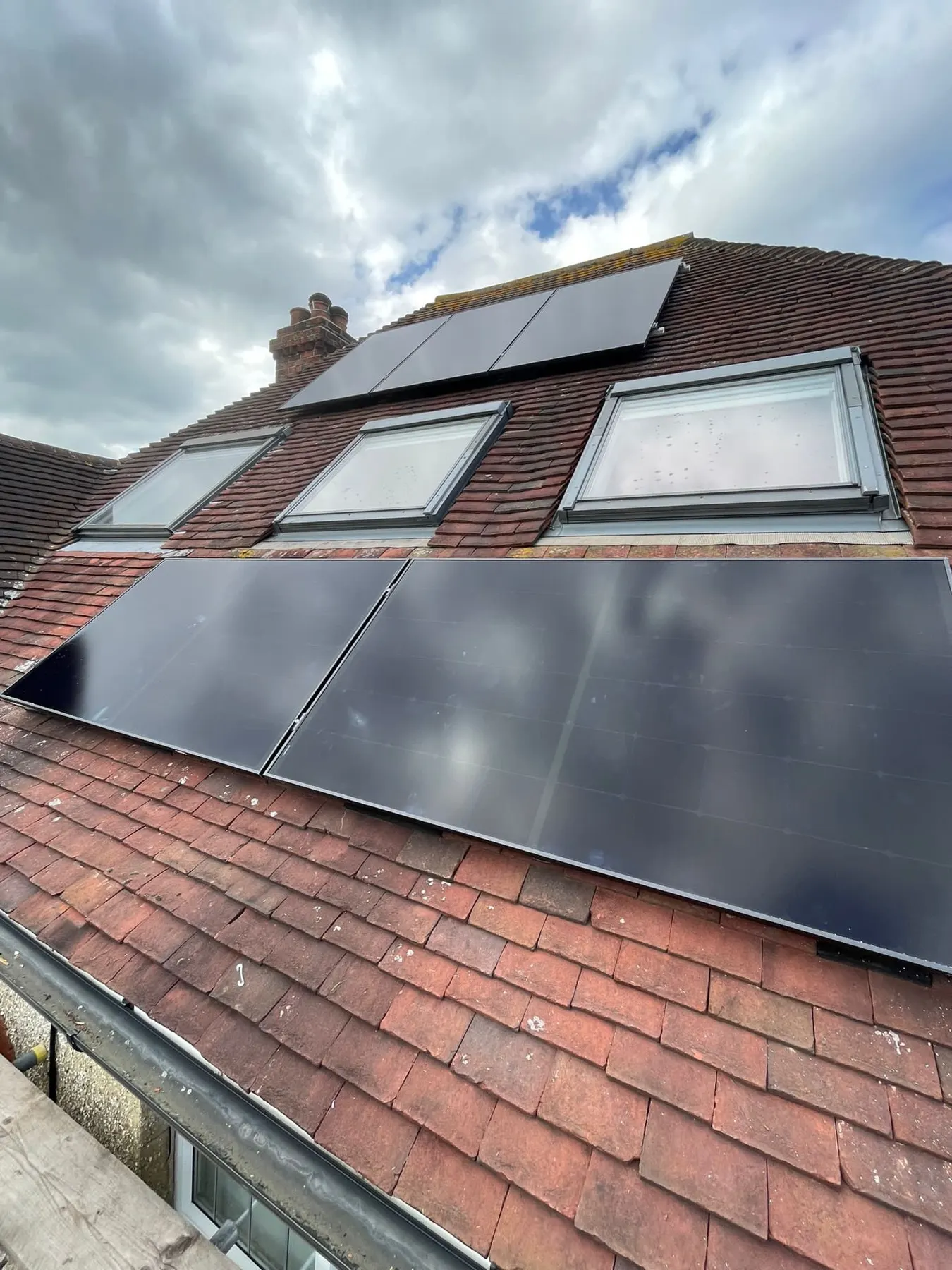 Portsmouth, Hampshire
What Hampshire conditions mean for your roof.
Southampton gets around 1,700 hours of sunshine a year against a UK average near 1,400, but a county figure says little about your roof. Orientation, pitch, shading, system size and how much of the output the household uses decide the result, so the estimate comes from the address.
Dull days cut output without stopping it. What matters is a full year of generation, which is why we do not promise a fixed payback.
How your household uses electricity.
Two homes with identical roofs can need very different systems. One is empty until six and uses most of its power in the evening. The other has someone home all day and an electric car charging overnight. The first gains more from a battery, the second from a larger array and a smart charger.
Out all day
More of the generation is surplus at midday, so a battery earns its place sooner.
Home most days
More of the output is used directly, so panel count matters more than storage.
Charging a car
A regular load that suits solar-aware charging and, on some tariffs, overnight rates.
Planning for what you will add next.
An EV or a heat pump changes the right system size, sometimes by a lot. It is cheaper to design for them at the start than to find the array and inverter are too small later. We ask about both at enquiry, and where nothing is planned we leave room to add them.
That is the idea behind planning solar, battery and charger as one system: the equipment is chosen to work together, and each stage can follow when the budget allows.
National parks, conservation areas and listed buildings.
Solar on a typical Hampshire home is usually permitted development: no application, provided panels stand no more than 200mm off the roof surface and sit below the ridge line. Exceptions include listed buildings, certain conservation areas, such as parts of Winchester and Romsey, and homes within the New Forest or South Downs National Parks, where appearance is scrutinised more closely.
Whether your property is affected depends on the exact address. We check every Hampshire home at enquiry, before a survey is booked.
In practice
A normal roof-mounted array on an ordinary house is frequently still permitted development, even in a protected area. Ground arrays, large or conspicuous installations and listed buildings are likelier to need permission, and we say early which side of the line you are on.
Listed buildings always require listed building consent, wherever they are, because any alteration needs separate approval.
Georgian terraces, flint cottages and thatch.
Hampshire's market towns have plenty of Georgian and Victorian terraces, and many villages still have traditional flint and brick cottages. Roof pitch, tile type and condition all change what a survey needs to check. Thatch, still found around the New Forest, cannot carry panels, so a ground array or a separate building is the usual alternative.
See what your Hampshire roof could generate
Tell us about your home and what you're considering. We'll review suitability, including a planning check for your property.
Free and no obligation. Asking about payment options is not a finance application and won't affect your credit file.
You are not committing to anything by asking. If the home looks like a fit, someone from the team may be in touch to clear up a few details before your plan is drawn up.